Quick Summary
Payload capacity, chassis construction, and tow-vehicle compatibility matter more than price when buying a trailer. Standard configurations work for straightforward hauling, while specialized equipment often needs a custom-engineered build matched to weight, routes, and conditions. Maintenance costs and fuel efficiency add up over a trailer’s working life, making total cost of ownership a better measure than the initial purchase price.
Buying a trailer is not a decision made on price alone. The trailer chosen today affects payload capacity, fuel efficiency, and uptime for years. It’s worth slowing down and looking past the sticker price before signing off on a purchase.
Fleet managers and owner/operators face this decision more often than most people realize, be it a first purchase or an addition to an existing fleet. At TarasPort Trailers, we work with buyers across industries, and want to walk you through what factors to consider before buying a trailer truck or utility unit.
Buying a Trailer: Where to Start
Every purchase starts with a simple question: what will this trailer haul, and how often? A trailer used daily for heavy equipment needs different specifications than one used occasionally for light cargo runs.
Load type and frequency shape almost every decision that follows, from axle configuration to hitch style. A trailer built for occasional light use won’t hold up under daily heavy loads, and a trailer built for heavy-duty hauling might be more than a light-use operation actually needs.
Payload Capacity and Weight Ratings
Payload capacity often gets treated as a single number, but it depends on several factors working together. Axle rating, frame construction, and suspension design all affect how much weight a trailer can carry safely.
Buyers should think about maximum loads and typical loads separately. A trailer rated for its heaviest possible use case might sit underutilized most of the time, while a trailer sized for average loads could fall short during peak demand.
Reinforced frames and properly rated axles matter more than raw capacity numbers, because a trailer engineered to distribute weight evenly across its structure holds up better over years of use than one built only to hit a target rating.
Vehicle Compatibility and Towing Requirements
The tow vehicle already in a fleet often narrows the field before other factors even come into play. Gooseneck trailers need a pickup bed and compatible hitch installation, while bumper pull trailers work with a wider range of vehicles, including light-duty trucks and some SUVs.
Buyers should confirm their tow vehicle’s gross combined weight rating before finalizing a trailer purchase. A mismatch between trailer weight and towing capacity creates safety risks and puts unnecessary strain on the vehicle’s engine, transmission, and brakes.
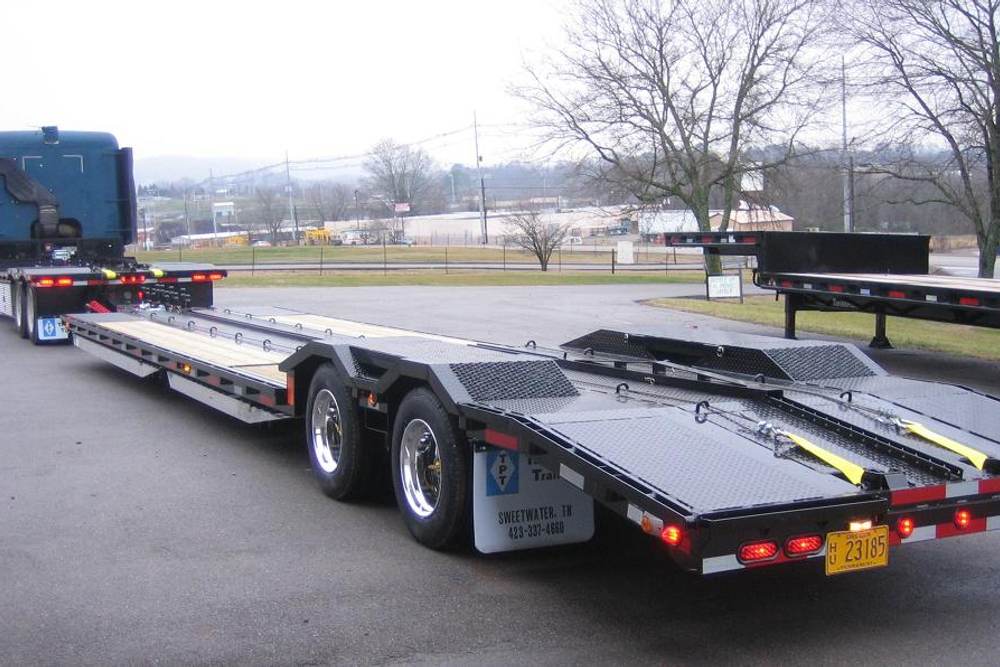
Specialty applications add another layer of consideration. For example, buying a utility trailer for auto transport means accounting for vehicle wheelbase, loading geometry, and ramp configuration. TarasPort’s work with auto transport trailer builds shows how specialized these requirements can get once the cargo itself becomes part of the engineering equation.
Chassis Construction and Long-Term Durability
A trailer’s chassis determines how well it holds up under repeated use. Frame material, weld quality, and structural design all affect service life, particularly for trailers running daily routes or carrying heavy, uneven loads.
A few factors worth checking before finalizing a purchase:
- Frame material: Steel construction offers strength and durability for heavy-duty applications, though it does add weight compared to lighter alternatives
- Suspension type: Axle and suspension configuration should match expected load weight and road conditions, not just the trailer’s base specifications
- Reinforcement points: High-stress areas including hitch connections and axle mounts benefit from added reinforcement, especially for trailers carrying heavy or dynamic loads
- Corrosion resistance: Coatings and finishes protect against rust and wear, which matters more for trailers exposed to weather or road salt regularly
Customization Versus Standard Configurations
Standard trailer configurations work fine for straightforward hauling needs, but specialized applications often call for something built around the equipment itself. A generator set, a mobile substation, or an oilfield build all have requirements a generic platform wasn’t designed to meet.
Custom-engineered trailers get built to spec around the equipment they’ll carry, the routes they’ll travel, and the conditions they’ll face. This approach adds upfront planning time compared to buying a standard configuration, but it often pays off through reduced maintenance and longer service life.
Buyers weighing standard versus custom options should consider how specific their hauling needs are. General cargo and light equipment often work fine on standard configurations, while specialized equipment or demanding routes tend to benefit from a build tailored to the job.
Maintenance Requirements and Total Cost of Ownership
Purchase price tells only part of the story. Maintenance schedules, replacement parts, and expected service life all factor into what a trailer actually costs over its working life.
A trailer built with quality components and proper reinforcement generally needs fewer repairs than one assembled from lower-grade materials. Fewer repairs mean less downtime, which matters directly to fleets running tight schedules or owner/operators who depend on their equipment staying on the road.
Fuel efficiency deserves consideration too. Trailer weight and aerodynamics affect fuel consumption for the tow vehicle, and that cost adds up significantly across a fleet running long routes year-round.
Getting the Trailer Decision Right the First Time
Buying a trailer means balancing several factors at once: load type, payload capacity, tow vehicle compatibility, chassis construction, and long-term maintenance costs. TarasPort Trailers designs solutions around these exact considerations, helping owner/operators and fleet managers avoid costly mismatches between equipment and application.
A custom build starts with the loads you actually run. Connect with our team to talk through the details.
FAQs
What’s the most important factor when buying a trailer?
Load type and frequency of use shape most other decisions, including axle configuration and hitch style. Matching a trailer to the job avoids costly mismatches down the road.
How do I know what payload capacity I need?
Payload capacity depends on frame construction, axle rating, and suspension design working together. Buyers should consider both typical loads and maximum loads separately before choosing a rating.
Should I buy a custom trailer or a standard configuration?
Standard configurations work well for straightforward cargo and light equipment. Specialized applications covering generator sets or oilfield builds often benefit from a custom-engineered chassis matched to the equipment.
Does my tow vehicle affect which trailer I should buy?
Yes. Gooseneck trailers need a pickup bed and compatible hitch, while bumper pull trailers work with a wider range of vehicles. Confirm the gross combined weight rating before buying to prevent safety and performance issues.
Is a lower-priced trailer a better long-term investment?
Not always. Lower-grade materials often require more frequent repairs, which adds downtime and cost over time. Total cost of ownership, not just purchase price, gives a clearer picture of long-term value.