Quick Summary
A step deck trailer is designed to solve a common hauling challenge by lowering the rear deck height, giving taller cargo the clearance needed to stay within legal height limits. Compared to standard flatbeds, step deck trailers are often the preferred choice for transporting construction equipment, agricultural machinery, and industrial units that would otherwise require oversized load permits. They simplify loading, improve regulatory compliance, and increase stability through a lower center of gravity. Although they share similarities with lowboy trailers, step deck trailers are designed for a different range of cargo. Custom configurations help match each trailer to the weight, height, and workflow requirements of the operation using it.
If you regularly haul tall equipment or oversized machinery, you have probably run into height clearance issues with a standard flatbed. This is exactly the problem a step deck trailer was designed to solve.
But what is a step deck trailer, and how does it differ from the flatbeds and lowboys you may already be familiar with? Understanding the answer can help you avoid costly permitting issues and choose the right equipment for your next haul.
At TarasPort Trailers, we build step deck trailers for fleets, independent operators, and military logistics teams who need reliable clearance without sacrificing load capacity. Here is what you should know before your next purchase or rental decision.
What is a Step Deck Trailer?
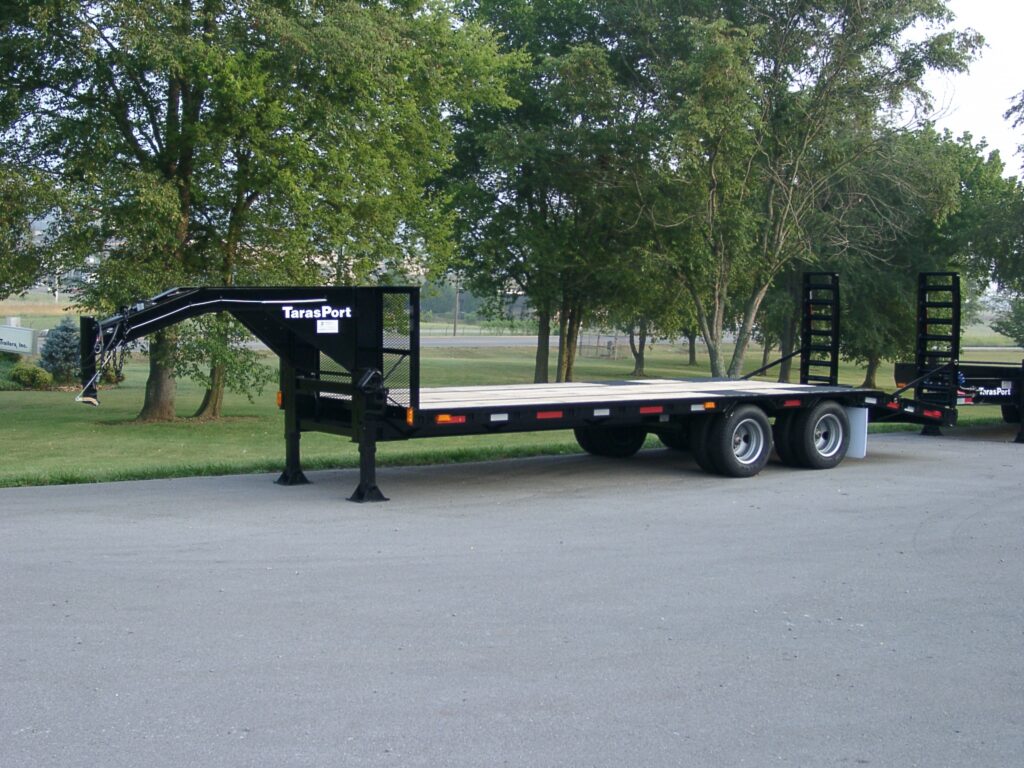
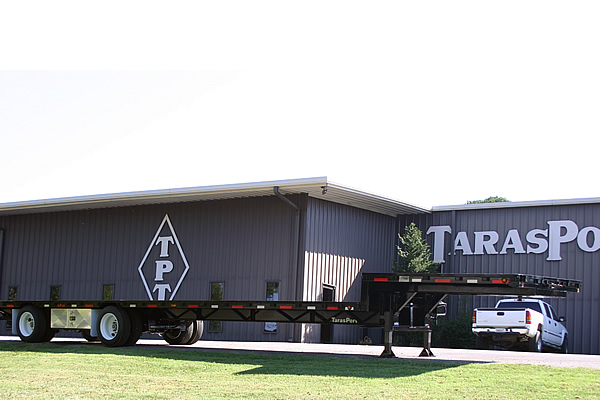
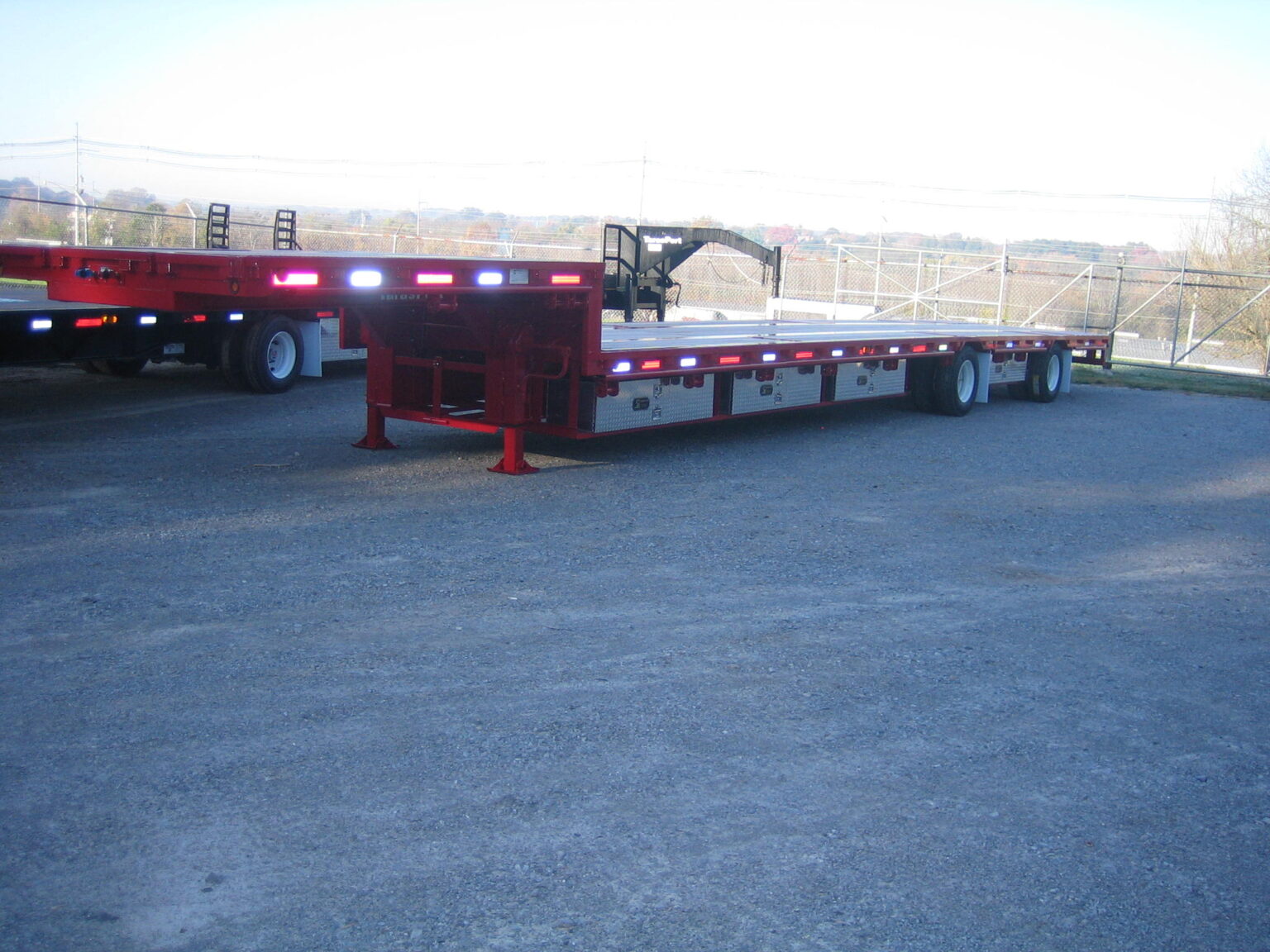
What is a step deck trailer? Also known as a drop deck trailer, it features two deck levels connected by a step instead of one continuous flat surface like a standard flatbed. The upper deck sits directly behind the truck cab, while the lower deck extends across the remaining trailer length closer to the ground.
This design reduces the overall deck height compared to a flatbed, creating additional vertical clearance before cargo reaches legal height restrictions.
In most configurations, the lower deck gains several extra inches of usable height. Those extra inches can make the difference between hauling within legal limits and needing an oversized load permit.
Step Deck Versus Flatbed Trailers
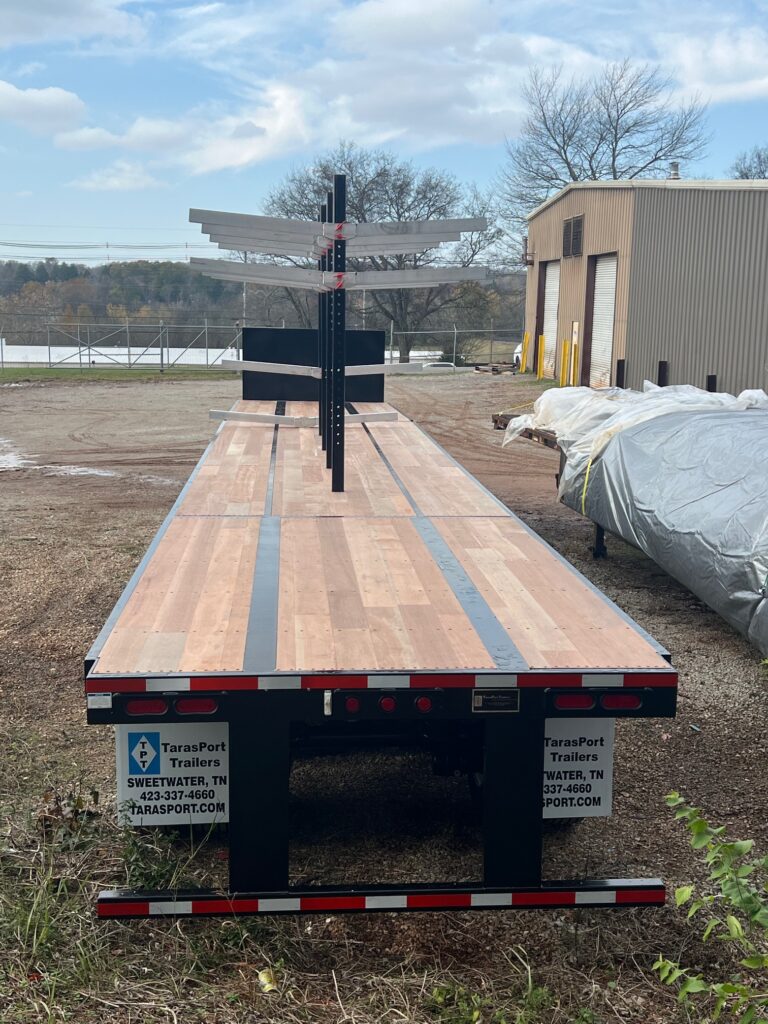
The core difference between a step deck and a flatbed trailer comes down to deck height and configuration. A flatbed has a single, level deck surface sitting at a consistent height for its entire length. This works well for cargo that is wide or long but not particularly tall.
A step deck trailer, on the other hand, is specifically designed for taller equipment. Its lower rear deck sits closer to the road, giving construction machinery, agricultural equipment, and industrial units more clearance beneath legal height limits. The tradeoff is a slightly more involved loading process because operators must account for the transition between the upper and lower deck.
Many companies that transport a variety of cargo maintain both trailer styles, selecting the one that best matches the load for each job.
Common Uses for Step Deck Trailers
Step deck trailers show up across a wide range of industries because tall cargo is more common than many people realize.
Construction companies rely on them to move excavators, bulldozers, and other heavy machinery that would not clear height restrictions on a standard flatbed. Agricultural operations use step decks for tractors, combines, and other tall farm equipment. Oil and gas operators frequently choose step deck configurations for oil field equipment that requires both clearance and durability in demanding environments.
Manufacturing and industrial businesses also depend on step deck trailers to transport large machinery between facilities, particularly when that equipment cannot be disassembled for shipping.
Key Benefits of a Step Deck Trailer
Additional height clearance is only one advantage of a step deck trailer.
Loading is often simpler than with enclosed trailers because cargo can usually be loaded from the rear or sides using ramps instead of specialized lifting equipment. Regulatory compliance also becomes easier since the added clearance reduces the chances of exceeding legal height limits that would otherwise require oversized load permits.
Versatility is another major advantage. Many step deck trailers can handle a wide variety of cargo beyond tall machinery, which makes them a valuable addition to mixed-use fleets. The lower deck also lowers the cargo’s center of gravity, improving stability during transport compared to taller trailer configurations.
Step Deck Trailers Versus Lowboy Trailers
It is worth noting that step deck trailers are not the same as heavy duty lowboy trailers, even though both are designed to address clearance concerns. Lowboys sit even lower to the ground and are typically used for extremely heavy or oversized equipment that exceeds what a step deck can safely or legally accommodate.
Choosing between the two often comes down to the specific weight and height of the cargo being hauled.
Choosing the Right Step Deck Trailer
Not every step deck trailer is built the same way, which is why customization matters. Deck length, axle configuration, ramp style, and weight capacity should all be matched to your specific operational needs rather than selected off a generic size chart.
At TarasPort Trailers, we design every step deck trailer around the customer’s actual cargo and workflow. Whether you manage a national fleet or operate independently, our team works directly with you to determine the configuration that will perform best for your specific hauling requirements. Browse our full range of trailer solutions to see how our builds compare across categories.
If you are ready to discuss specifications for your next step deck trailer, request a quote and our team will help you find the right fit.
FAQs
What is a step deck trailer used for?
A step deck trailer is used to haul tall cargo, such as construction equipment, agricultural machinery, and industrial units, that would exceed legal height limits on a standard flatbed.
How much clearance does a step deck trailer provide?
Step deck trailers generally offer several additional inches of usable height on the lower deck compared to a flatbed, though exact clearance depends on the specific trailer configuration.
Is a step deck trailer harder to load than a flatbed?
Loading a step deck trailer is generally straightforward, though the step between deck levels requires some additional planning compared to a single level flatbed surface.
What is the difference between a step deck and a lowboy trailer?
A lowboy sits lower to the ground than a step deck trailer and is typically used for heavier or taller equipment that exceeds standard step deck capacity.
Can a step deck trailer be customized?
Yes. Deck length, ramp style, axle placement, and weight capacity can all be customized to match specific cargo and operational requirements.