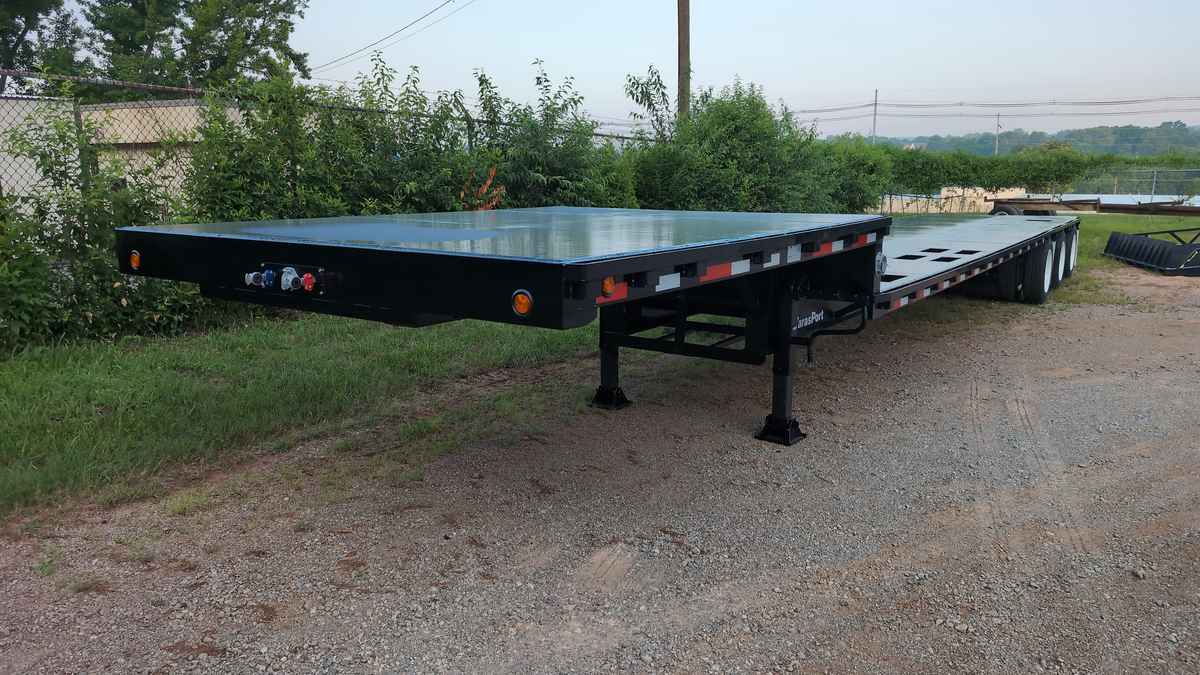
Quick Summary
Oil field trailers endure harsh operating conditions, including exposure to drilling fluids, frequent off-road travel, and cargo that varies in weight, dimensions, and load distribution. Long-term durability depends on reinforced frames, adequate ground clearance, and protective finishes designed to withstand chemical contact and corrosive environments. A trailer engineered for the terrain and equipment encountered in oil field operations typically performs better than a standard flatbed adapted for demanding fieldwork. If your trailers move heavy machinery between sites, see our custom trailer solutions for equipment mobilization for how we build around those loads.
Shopping for an oil field trailer means dealing with specs that general equipment catalogs seldom address in enough detail: corrosion exposure, off-road suspension, and load configurations built around drilling and production equipment rather than everyday freight. Fleet managers who skip past these details often end up with a trailer that works fine on the highway and struggles the moment it reaches an active site. Fleets running oil field equipment in Texas can also visit our Texas trailer manufacturer page for local details.
Terrain and Ground Clearance
Oil field trailers regularly travel across access roads that vary from compacted gravel to muddy tracks and uneven ground. A trailer designed primarily for paved highways may lack the clearance needed to navigate these conditions safely. Crews running remote power equipment can also see our generator trailer manufacturers page for how we build around that gear.
Fleet managers should evaluate ground clearance against the ruts, uneven surfaces, steep approaches, and washouts that can develop after heavy rainfall. A suitable configuration helps reduce the risk of the undercarriage striking the ground or the trailer becoming immobilized on difficult terrain.
Suspension design deserves equal attention. Highway-oriented suspension systems prioritize stable performance on paved surfaces, but repeated impacts from potholes, rocks, and uneven access roads can transfer excessive shock to the cargo and trailer frame. An off-road-capable suspension system helps manage these impacts, reducing stress on structural components and limiting unnecessary movement of secured equipment.
Tire specifications should reflect the same operating conditions. Tires intended primarily for highway travel may experience accelerated wear or sidewall damage when exposed to sharp rocks, loose gravel, and rutted surfaces. Depending on the fleet’s routes, tires rated for combined on-road and off-road use may provide a practical balance between traction, durability, and highway performance.
Managers should also consider load ratings, inflation requirements, and replacement availability when selecting tires for remote operations.
Corrosion Resistance for Drilling Chemicals and Salt Exposure
Drilling fluids, produced water, and salt-bearing substances can accelerate corrosion when they contact inadequately protected steel. Trailers operating in these environments need protective systems suited to the chemicals, moisture levels, and contaminants encountered during daily use.
A properly selected coating system can help slow rust formation and surface deterioration more effectively than a basic finish intended for ordinary highway applications.
Corrosion protection worth checking on an oil field trailer includes:
- A multi-layer coating process rated for chemical and salt exposure
- Sealed electrical connections and wiring harnesses
- Stainless or coated hardware at points prone to moisture buildup
- Drainage paths that keep standing fluid off the frame
Skipping corrosion protection to save upfront cost tends to cost more over a trailer’s service life, once frame repairs, hardware replacement, and downtime from failed components get added up.
Maintenance That Extends Trailer Life in the Field
Field conditions accelerate wear on components that would last much longer on a highway-only trailer. Grease fittings exposed to dust and grit need more frequent service, and brake components exposed to mud and standing water benefit from a sealed design that keeps contaminants away from moving parts.
A maintenance schedule built around actual field exposure, rather than a generic interval pulled from a highway-use manual, catches wear before it turns into a breakdown at a remote site. Checking tire pressure, wheel bearings, and suspension hardware before and after each field deployment catches small issues while they are still cheap to fix.
Load Requirements for Oil Field Equipment
Oil field cargo ranges from drilling pipe and wellhead equipment to pumps, tanks, and generators, and each load type puts different stress on a deck. Pipe loads concentrate weight along the trailer’s length, while tanks and pump packages apply pressure across a smaller footprint, and a deck built for one load type does not always handle the other well.
Axle rating and deck reinforcement should get chosen against the heaviest regular load a trailer carries, not an average figure that leaves no margin for the occasional oversized piece. A reinforced deck section built into high-stress zones reduces flexing and extends the life of the trailer’s structural components.
Deck Layout for Mixed Oil Field Loads
A single oil field trailer often needs to handle pipe one week and a pump package or tank the next, and a deck built around only one load type limits what a fleet can do with the trailer between jobs. Flat, unobstructed deck space paired with tie-down points placed across multiple zones lets crews secure pipe bundles, equipment skids, or tanks without improvising anchor points on the fly.
Deck width also plays into how a trailer handles oversized wellhead components or skid-mounted equipment that does not fit neatly within a standard footprint. A wider deck with reinforced edge rails gives crews room to position irregular loads correctly and distribute weight across more of the trailer’s structure instead of concentrating it near the centerline.
Securement hardware needs the same flexibility as the deck itself. Chain binders, strap anchors, and stake pockets spaced at useful intervals give crews more than one way to secure an irregular load, instead of forcing every job into a fixed set of anchor points designed around a single cargo type.
Specs That Match Field Conditions
A trailer pulled from a general catalog is built around an average set of conditions that seldom lines up with a specific field’s terrain, climate, and equipment mix. Oil field operators get more reliable service from a platform spec’d around their actual routes, from the access roads at the wellsite to the highway miles between locations.
Deck length, axle count, and hitch configuration should reflect the equipment a fleet moves most often, with enough reserve capacity built in for the heavier or larger pieces that show up periodically. That approach keeps one trailer useful across more of a fleet’s workload instead of requiring a separate unit for every load type.
Oil Field Trailers Built to Spec by TarasPort
At TarasPort Trailers, we build oil field trailers around the terrain, corrosion exposure, and load requirements each site presents, rather than adapting a general-purpose flatbed to field conditions it was not designed for.
Reinforced frames, finishes selected for chemical and salt exposure, and deck configurations matched to drilling and production equipment can be specified on every custom build, backed by over 37 years in business and more than 4,000 trailers built for operators across 30-plus states. Fleet managers can request a quote built around their specific sites and equipment. Because chemical exposure varies from site to site, discuss the fluids and conditions your trailers will see directly with TarasPort’s team.
FAQs
What makes an oil field trailer different from a standard flatbed?
An oil field trailer is built with added ground clearance, off-road-tuned suspension, and corrosion-resistant finishes rated for drilling chemicals and salt exposure, none of which a standard highway flatbed typically carries.
How does terrain affect oil field trailer specs?
Access roads at drilling sites range from gravel to deep mud, so ground clearance and suspension setup need to handle ruts and uneven grading without bottoming out or transferring every impact to the load.
Do oil field trailers meet DOT road standards?
A properly built oil field trailer is designed to meet DOT standards for its configuration and load rating, while also including the terrain and corrosion protection features that field conditions call for.